


SurfOS is being developed as an AI-driven operating platform aimed at modernizing how air operators manage day-to-day operations. The company says the system will integrate operational and aircraft data to support functions such as flight operations, crew management, and analytics, with the flexibility to accommodate additional aircraft types in the future.
Surf Air Mobility Pushes SurfOS Toward 2026 Commercial Launch
Surf Air Mobility confirmed that development of SurfOS remains on track for a commercial rollout this year in 2026, following a series of key milestones in engineering, internal deployment, and strategic partnerships. The news marks a major step in the company’s evolution from a traditional air carrier to a technology‑driven mobility ecosystem provider.
SurfOS is intended to serve as a unified digital backbone for air mobility operators, integrating data across flight operations, charter brokerage, crew scheduling, and aircraft ownership. Built on Palantir Technologies’ Foundry and Artificial Intelligence Platform (AIP), SurfOS is designed to reduce operational complexity. The company says it will also improve utilization, speed, and decision-making across the aviation value chain.
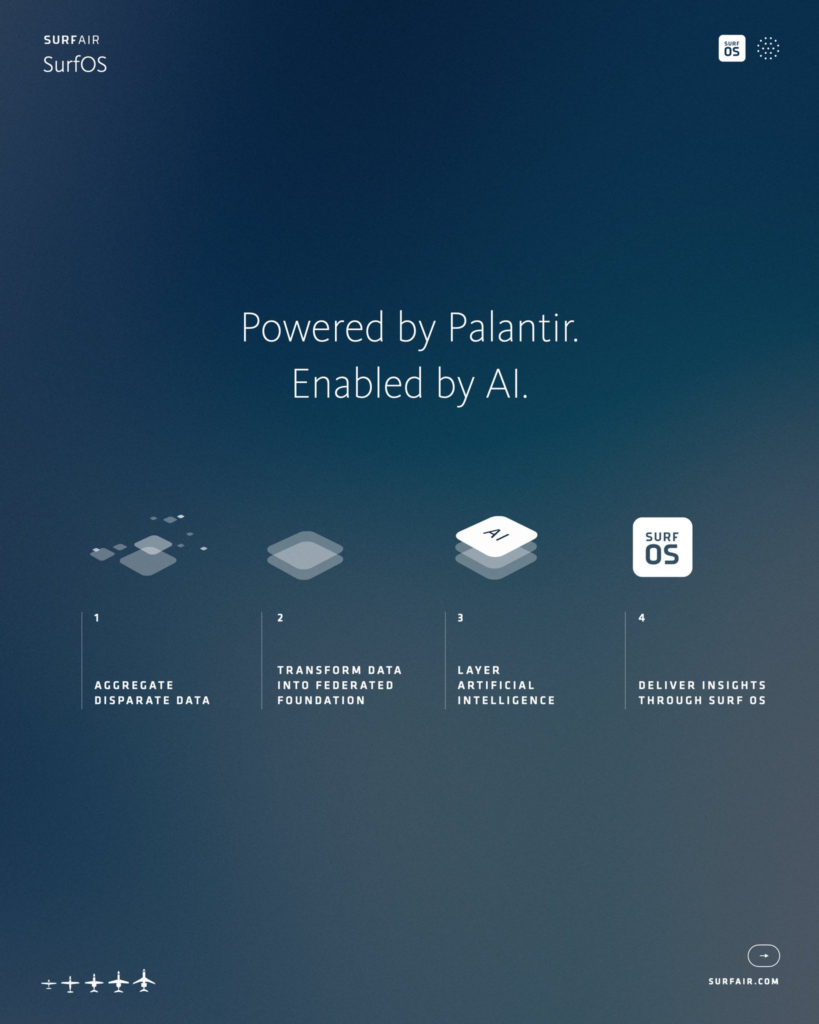
Palantir Foundry
Palantir’s Foundry operating system uses ontology to organize data so that it can be optimally retrieved and utilized for complex decision making.
Per Wikipedia: “In information science, an ontology encompasses a representation, formal naming, and definitions of the categories, properties, and relations between the concepts, data, or entities that pertain to one, many, or all domains of discourse.”

The 3 structural layers of Palantir’s Foundry Ontology core:
- Semantic
- Kinetic
- Dynamic

Once the data is processed through the Ontology Core, it can be accessed by the Data and Modeling Teams to use for their specific projects.
Palantir AIP (Artificial Intelligence Platform)
With the data organized, managed and connected to the different teams, the other side of the equation is analyzing that data using AI in order to make predictions as well as to generate fast and efficient decisions in a fraction of the time.

Surf Air Mobility told eVTOL buzz it selected Palantir’s Foundry and AIP platforms for their ability to consolidate and operationalize fragmented aviation data. By integrating the technologies into its SurfOS operating system, the company aims to convert operational data into actionable insights, improving reliability and transparency while enabling more efficient, data-driven decision-making across aviation operations.
Palantir x Surf Air Mobility – Investor Day 2023 (watch below):
Three Core Modules for a Fragmented Industry
The SurfOS ecosystem is being developed around three primary modules:
- OperatorOS
- BrokerOS
- OwnerOS
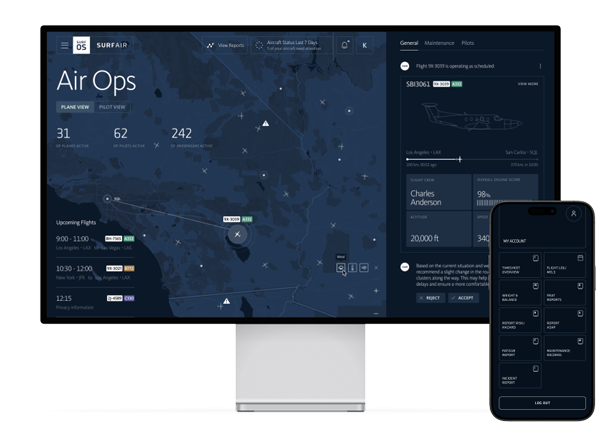
OperatorOS
- Supports flight operations, crew management, compliance, and scheduling.
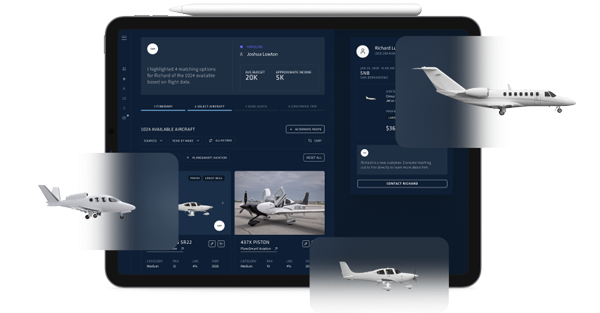
BrokerOS
- Focused on automating and accelerating aircraft sourcing, pricing, and charter booking workflows.
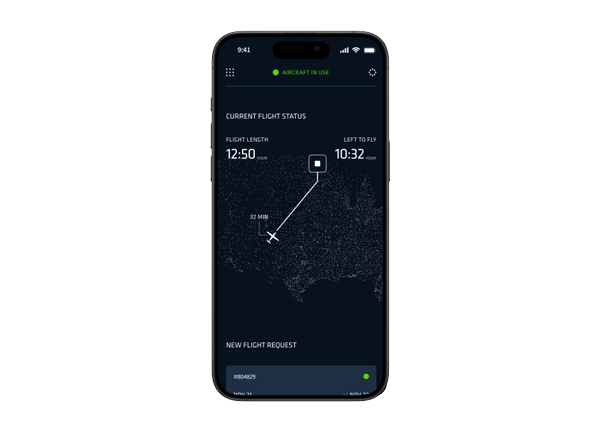
OwnerOS
- Offering aircraft owners visibility into utilization, performance, and financial metrics.
Surf Air Mobility is currently using SurfOS internally across its airline and on-demand charter operations, while select partners participate in early beta testing.
Two airlines owned by Surf Air Mobility include Southern Airways Express and Mokulele Airlines.

Southern Airways Express
- A Surf Air Mobility company
- Headquartered in Addison, Texas
- CEO: Deanna White (CEO of Surf Air Mobility)
- Many flights part of the Essential Air Service (EAS) program which are long-term government programs intended to serve smaller communities across the United States
- Destinations include:
- Central Region
- Memphis, Tennessee (MEM)
- Nashville, Tennessee (BNA)
- Hot Springs, Arkansas (HOT)
- Harrison, Arkansas (HRO)
- Jonesboro, Arkansas (JBR)
- St. Louis, Missouri (STL)
- Dallas, Texas (DFW)
- West Coast
- Los Angeles, California (LAX)
- El Centro/Imperial, California (IPL)
- East Coast
- Lancaster, Pennsylvania (LNS)
- Bradford, Pennsylvania (BFD)
- DuBois, Pennsylvania (DUJ)
- Pittsburgh, Pennsylvania (PIT)
- Washington/Dulles, (IAD)
- Central Region

Mokulele Airlines
- A Surf Air Mobility company
- Headquartered in Kahului, Hawaii
- CEO: Deanna White (CEO of Surf Air Mobility)
- Destinations
- Honolulu, O’ahu
- Kahului, Maui
- Kapalua, Maui
- Hana, Maui
- Kona, Big Island
Early Results Show Efficiency Gains
According to the company, early internal deployment of SurfOS has already delivered measurable operational improvements. Surf Air reports reductions in staffing costs, faster quote-to-booking timelines, increased bookings per broker, and a significant rise in transactions handled directly on the platform.
While still pre-commercial, these early results are intended to demonstrate the system’s potential value to third-party operators, charter brokers, and eventually next-generation air mobility providers.
Positioning Software for the eVTOL and uSTOL Era
Although SurfOS is not an eVTOL or uSTOL platform today, its architecture is being developed with scalability and future aircraft types in mind. As eVTOL and hybrid-electric aircraft move closer to commercial service, operators will need integrated software capable of managing higher sortie rates, distributed networks, and increasingly complex regulatory requirements.
Surf Air Mobility believes SurfOS could play a role in supporting that transition, providing a data-driven operating layer capable of coordinating fleets, infrastructure, crews, and customers in a more automated environment.
Direct Aviation and Electra
As Surf Air explained to eVTOL buzz, the SurfOS platform is intended to support more efficient planning and execution of flights, with capabilities that can adapt as aviation operating models evolve, including the potential growth of non-traditional access point operations.
One OEM that is pioneering direct aviation and “non-traditional access point” operations is Electra.aero with its 9-passenger hybrid-electric ultra-short takeoff and landing aircraft.
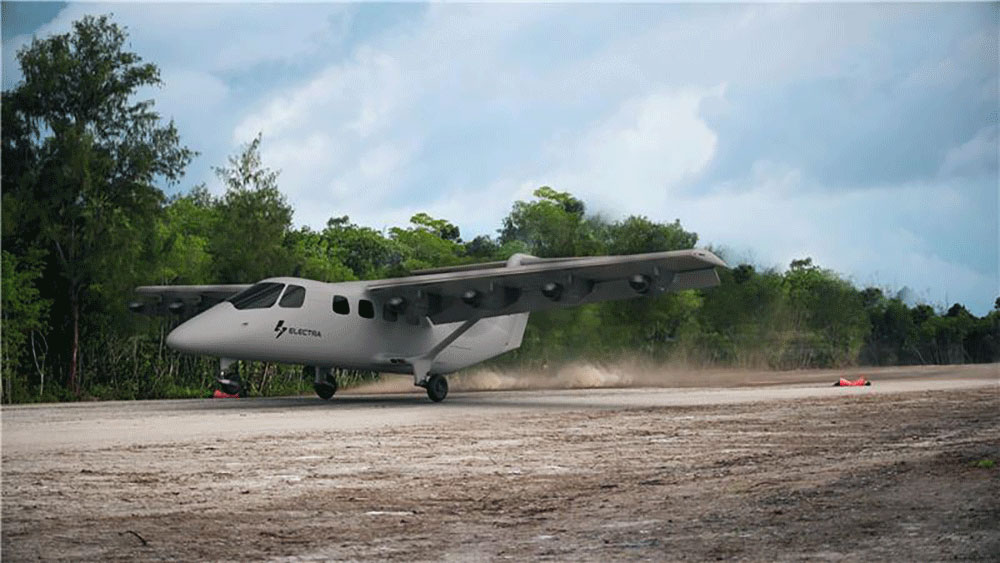
“Non-traditional access point” operations within a direct aviation framework:
- General Aviation (GA): Light aircraft operations that rely on short, regional, or community airfields rather than major commercial airports.
- Charter and On-Demand Flights: Point-to-point services using private or charter aircraft to access smaller or unconventional landing sites closer to passengers’ destinations.
- Humanitarian and Medical Operations: Missions that deliver medical teams, patients, or relief supplies into remote or disrupted areas, including locations with temporary or minimally developed runways.
- Cargo and Industrial Logistics: Transport of specialized or urgent cargo directly to worksites, industrial facilities, or distribution centers that lack access to large cargo airports.
“The EL9 can take off and land in as little as 150 feet, giving it access to tight, unimproved sites like forest clearings or temporary encampments. Its fixed-wing design and hybrid-electric propulsion deliver extended range, while robust landing gear allows it to operate from off-runway environments.” – Electra spokeperson in a statement to eVTOL buzz

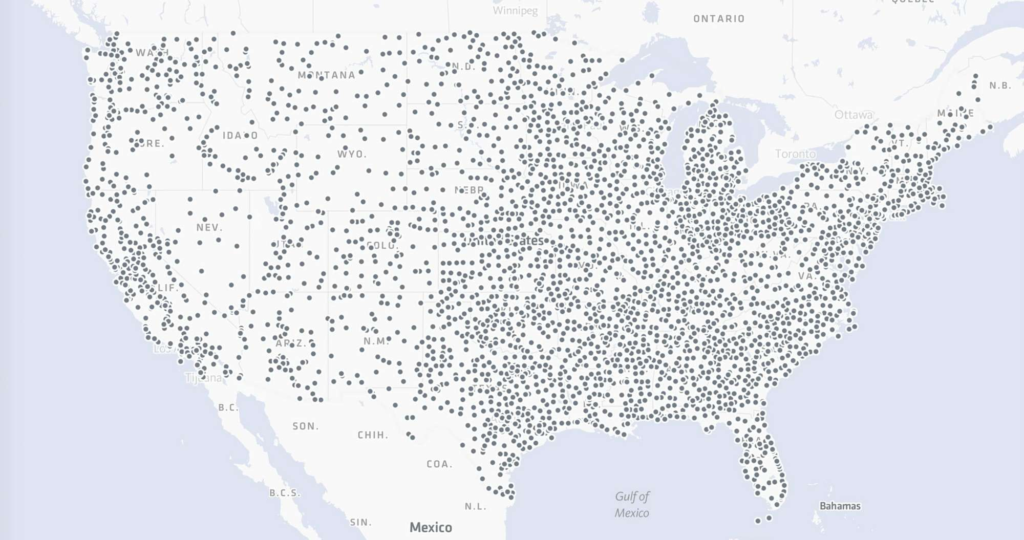
The Case for Direct Aviation
- There are roughly 5,000 publicly accessible airports, heliports, and seaplane bases.
- Around 90% of the US population lives within half an hour of a regional airport
- Flights that occur within the range of Regional Air Mobility (between 50 and 500 miles) total 2.4 billion trips per year

Despite the large number of regional and community airports, many remain underutilized, limiting opportunities for more direct, point-to-point air travel. For operators in direct aviation, this underuse presents both challenges and opportunities: smaller airfields often lack the infrastructure of major hubs but can provide faster, more flexible access for passengers and cargo. Surf Air’s SurfOS aims to address this gap by leveraging AI and operational analytics to optimize flight operations, crew management, and aircraft utilization across these non-traditional airports. In the context of regional air mobility, platforms like SurfOS, combined with aircraft such as Electra’s EL9, could make underused airfields strategic nodes for on-demand, charter, and cargo flights, enabling more efficient, community-focused air travel.

Electra EL9 Ultra-STOL (Ultra Short Takeoff and Landing aircraft)
- 9 passengers OR 3,000 lbs max payload
- 150 ft takeoff distance
- 175 knots cruise
- 1,000 nautical mile range + IFR reserves
- Hybrid-electric technology
- Robust landing gear for off-runway landings
A great video explaining the partnership between Electra and Surf Air Mobility:
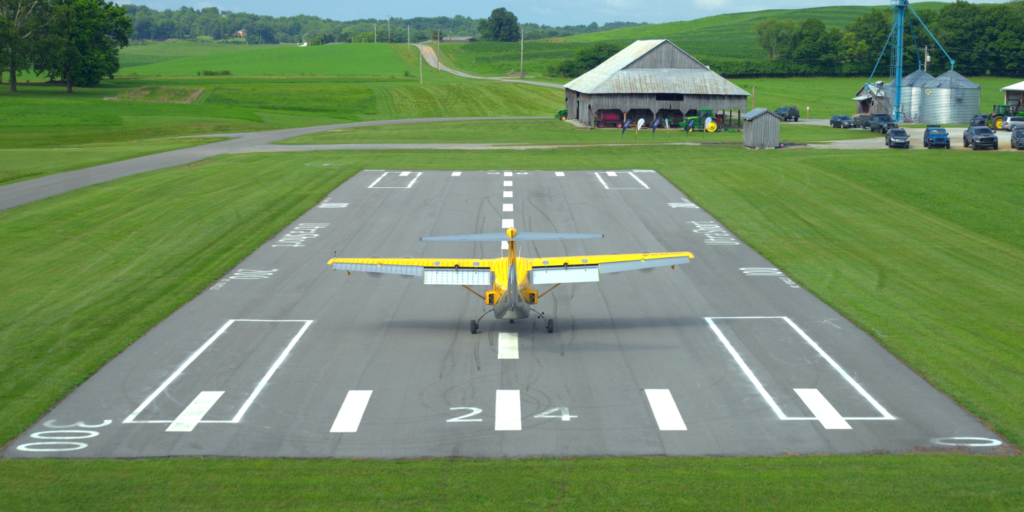
Electra demonstrated off-runway landing in a grass field with their EL-2 demonstrator in August, 2025 at the Virginia Tech Corporate Research Center. In cooperation with Virginia Tech and Surf Air Mobility, Electra conducted flight demonstrations at other locations besides the grass field, such as a 300 foot by 75 foot paved surface for small drones (UAS), and an access road on a campus research facility operated by Virginia Tech Transportation Institute (VTTI) in cooperation with the Virginia Department of Transportation (VDOT).
Electra’s Vice President of Commercial Programs, Diana Siegel, explained to eVTOL buzz the significance of this historic milestone for Electra and how these demonstrations at Virginia Tech align with their partnership with Surf Air, and future implementation of SurfOS within Regional Air Mobility:
“Electra’s flight demonstrations with Surf Air at Virginia Tech last summer demonstrated that Ultra Short aircraft can safely and repeatably operate from very small access points, including prepared grass strips and converted parking lots, located close to where people live and work. As we move from demonstrations to commercialization, SurfOS provides a critical enabling layer, connecting the long tail of regional passenger demand with flight planning, scheduling, and operational execution. We see this partnership as an important part of our roadmap to bringing Ultra Short aircraft into commercial service at scale.” – Diana Siegel, Vice President of Commercial Programs at Electra.aero
“Our relationship with Electra showcases the power of Surf Air Mobility’s platform to offer emerging aircraft OEMs like Electra the ability to go to market faster, with reduced operational risk, and increased scalability.” – Deanna White, CEO and COO of Surf Air Mobility (August 13, 2025)
Surf Air told eVTOL buzz that it looks forward to working with Electra as part of their broader relationship with other stakeholders in the industry.
Sustainability and Environmental Impact
According to Surf Air, SurfOS is designed to improve operational efficiency by increasing data visibility and reliability across flight operations. The company says enhanced scheduling, dispatch, and asset utilization could help reduce inefficiencies such as delays, excess fuel burn, and underutilized aircraft, potentially contributing to lower emissions over time as part of broader sustainability initiatives.
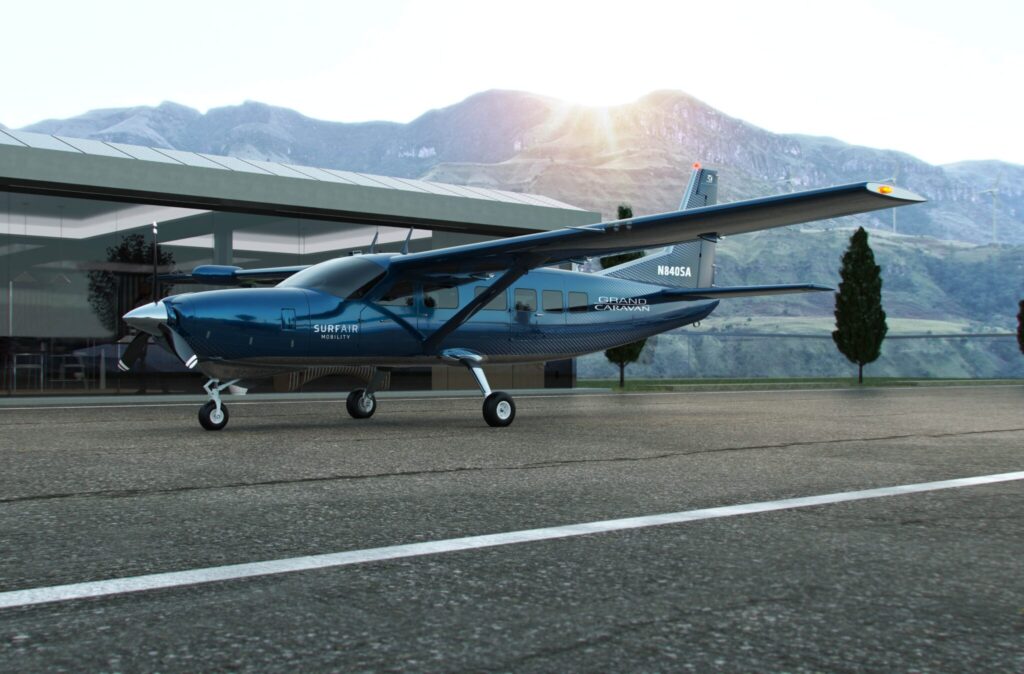
Alongside its software initiatives, Surf Air Mobility is advancing its sustainability goals by ordering a hybrid-electric version of the Cessna Grand Caravan EX, expected to be certified in 2027, and the Electra EL9, which is designed from the ground-up as hybrid-electric and is anticipated to be commercially available by 2029.
“As the country’s largest commuter airline, Surf Air is at the forefront of addressing the growing demand for cleaner, more affordable and convenient travel options. Electra is pleased to partner with Surf Air in spearheading the decarbonization of regional business aviation through the integration of our eSTOL aircraft into their fleet.” – John S. Langford, founder and CEO of Electra (February 15, 2024)

Backed by Strategic Capital and Partnerships
SurfOS development has been supported by a broader $100 million strategic transaction, with a portion of that capital allocated specifically to accelerating software engineering, enterprise features, and go-to-market readiness. The company has also expanded its relationship with Palantir to include additional implementation and commercialization support.
Looking Ahead
With a 2026 commercial launch target, SurfOS represents Surf Air Mobility’s long-term bet that software will be as critical to advanced air mobility as aircraft themselves. As the eVTOL and uSTOL sector moves from prototypes to scalable operations, platforms that can unify data, automate workflows, and enable efficient network growth are expected to become a foundational part of the ecosystem.
For the AAM industry, SurfOS offers a glimpse into how digital infrastructure may help unlock operational scale in the years ahead.
We at eVTOL buzz would like to thank Diana Siegel, Vice President of Commercial Programs at Electra.aero for providing us with a statement, as well as Surf Air Mobility for answering our questions.
Stay tuned to more updates and deep dives about Surf Air Mobility at eVTOL buzz! ✈️
More Info:
Surf Air Mobility Advances SurfOS Development, Targets Commercial Software Rollout in 2026, and Reports Milestones: click here
Electra and Surf Air Mobility Complete First Commercial Demonstrations of Ultra Short Aircraft at Virginia Tech Electra and Surf Air Mobility Complete First Commercial Demonstrations of Ultra Short Aircraft at Virginia Tech: click here
Surf Air Mobility Participates in Demonstration Flight Event of Electra’s Electrified Ultra-Short Takeoff Aircraft: click here
Surf Air Mobility and Electra Enter Bilateral Agreement to Bring eSTOL Aircraft to Market, Incorporate Surf Air Technology into Joint Systems, and Create Leasing Partnership: click here
Virginia Tech brings together experts for direct-aviation testing and discussion: click here
Palantir’s Foundry platform: click here
Palantir’s AIP platform: click here
Surf Air Mobility Announces $27 Million Registered Direct Offering of Common Stock: click here
Surf Air Mobility Announces Launch Customers for SurfOS™ Software: click here
Surf Air Mobility Announces Plan to Form New Venture, Surf Air Technologies LLC, and Enters Agreement with Palantir Technologies Inc. to Power Operating System for the Advanced Air Mobility Industry: click here