


Horizon Aircraft and their “Can-Do Crew” 🇨🇦 continue to turn heads in the advanced air mobility world as its Cavorite X7 hybrid eVTOL achieved a string of historic milestones in 2025 and enters 2026. With a unique fan‑in‑wing design, hybrid propulsion, and tangible commercial interest, the company is carving a distinct path in the eVTOL landscape, one that focuses on regional air mobility (RAM) performance and capabilities rather than short urban hops.
Historic Forward Transition: A Major Technical Win
In May 2025, Horizon announced that its large‑scale prototype accomplished a stable transition from vertical hover to wing‑borne forward flight, a critical technical barrier for eVTOL designs. This puts the Cavorite X7 among a very small group worldwide to demonstrate this capability successfully.
Footage from the historic transition flight below:
What is Transition Flight
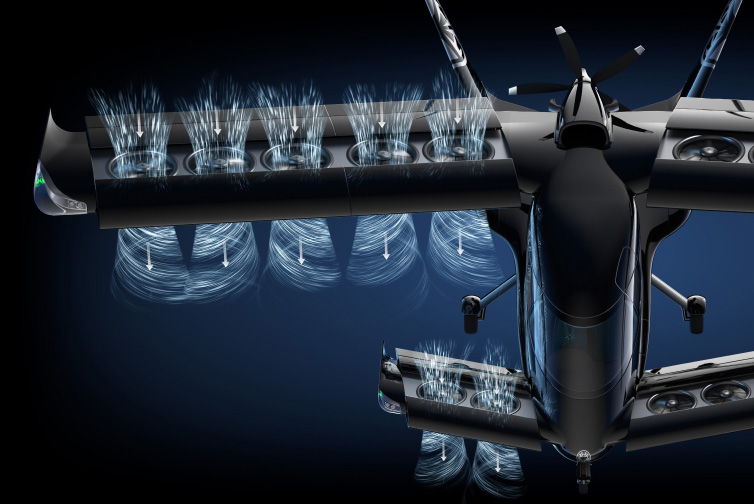
The Cavorite X7 features a revolutionary fan-in-wing design that blends the flexibility of a helicopter with the performance and speed of a traditional aircraft.
Its transforming wings house 14 high-powered lift fans, delivering the vertical thrust needed for smooth and efficient takeoff.
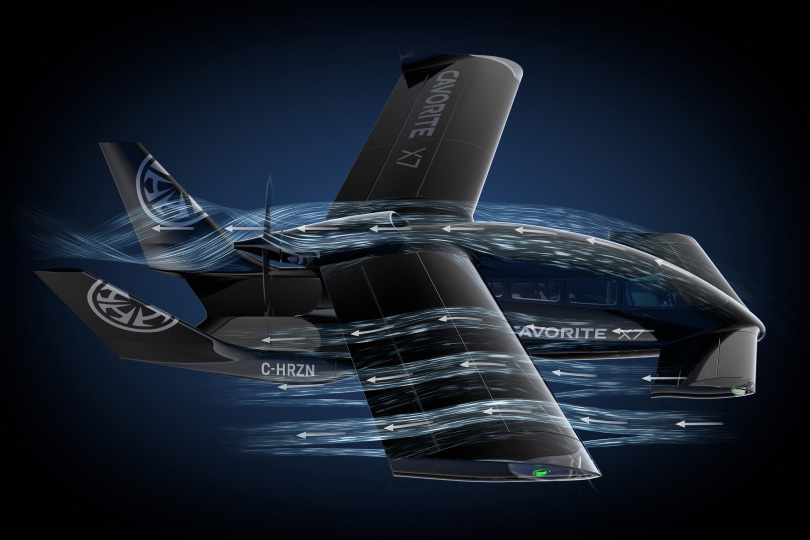
Once the Cavorite X7 reaches a safe altitude and speed, sliding panels conceal the lift fans, allowing it to transition into conventional airplane flight. For landing, it can use a standard runway, or redeploy the fans to touch down on a helipad. Horizon Aircraft claims the Cavorite X7 can even land in a space as small as a tennis court!
Horizon Aircraft
- Established in 2013
- Founded by Brian Robinson and Brandon Robinson
- CEO: Brandon Robinson
- Headquartered in Lindsay, Ontario, Canada
- Manufacturer of the Cavorite X7
- Hybrid-electric
- Unique Fan-in-Wing design
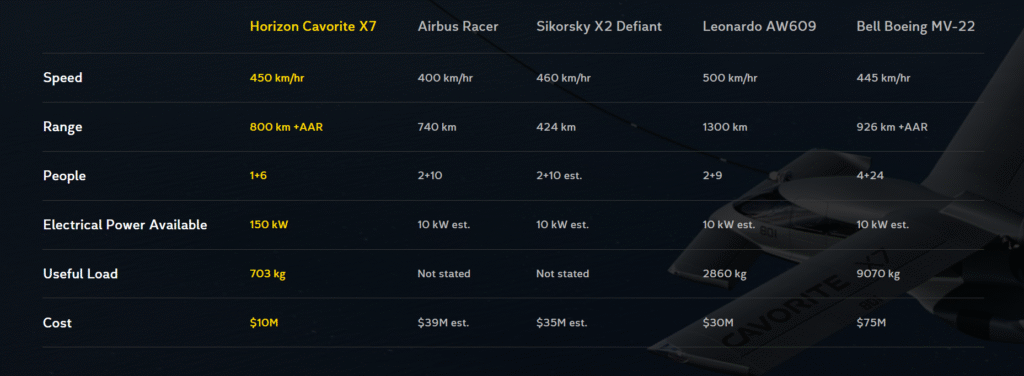
- Range: 800 km (500 miles) plus AAR
- Max cruise speed: 450 km/hr (280 mph)
- 7 seater (1 pilot plus 6 passengers)
- Max ferry range: 1,450 km (900 miles)
- Max gross weight: 2,500 kg (5,000 lbs)
What sets Horizon apart is its patented fan‑in‑wing system: 14 lift fans are integrated into the wing structure and covered by aerodynamic panels once in cruise flight. This approach is substantially different compared to the tilt mechanisms and nacelles that are used by its competitors. Horizon’s engineering team describes the transition phase as a “non‑event,” reducing mechanical complexity and enhancing safety.
The company projects cruise speeds up to ~250 mph and operational ranges exceeding 500 miles thanks to its hybrid powertrain; impressive numbers in the current Regional Air Mobility (RAM) arena.
Furthermore, as time flies, the milestone for the completion and first flight of the full-scale prototype is within sight. The Can-Do Crew has been working non-stop, and the fruits of their labor will be revealed in due time, as shared by the energetic Co-Founder and CEO running Horizon, Mr. Brandon Robinson himself:
“The progress achieved during the second quarter of fiscal 2026 provides strong momentum toward completing our full-scale aircraft and commencing initial testing within the next 12 to 18 months. Over the next six months, we will remain focused on expanding our world-class engineering team, scaling our supply chain, and deepening strategic partnerships that support our long-term vision.” – Brandon Robinson, Co-Founder and CEO of Horizon Aircraft
“With significantly improved working capital and incoming non-dilutive funding, coupled with a disciplined operating strategy that balances efficiency with growth, we are well positioned to continue investing in our people, advancing our technology, and executing toward completion of our full-scale aircraft.” – Brian Merker, CFO of Horizon Aircraft
Full‑Scale Prototype: From Paper to Production Path 🛠
Beyond aerodynamic innovation, Horizon is rapidly advancing its development pipeline:
- Full‑Scale Build Underway: The company is actively constructing a full‑scale prototype slated for initial testing within ~18 months.
- Technical Architecture Complete: Platform‑level design and propulsion hardware fabrication are progressing on schedule.
- Team Growth & Expertise: Horizon has bolstered its engineering ranks with seasoned developers, including notable hires from established eVTOL programs.
These elements signal a deliberate, engineering‑first progression rather than speculative promises, a distinction that increasingly draws interest from serious operators and investors alike.
Horizon’s Partnership with Motion Applied
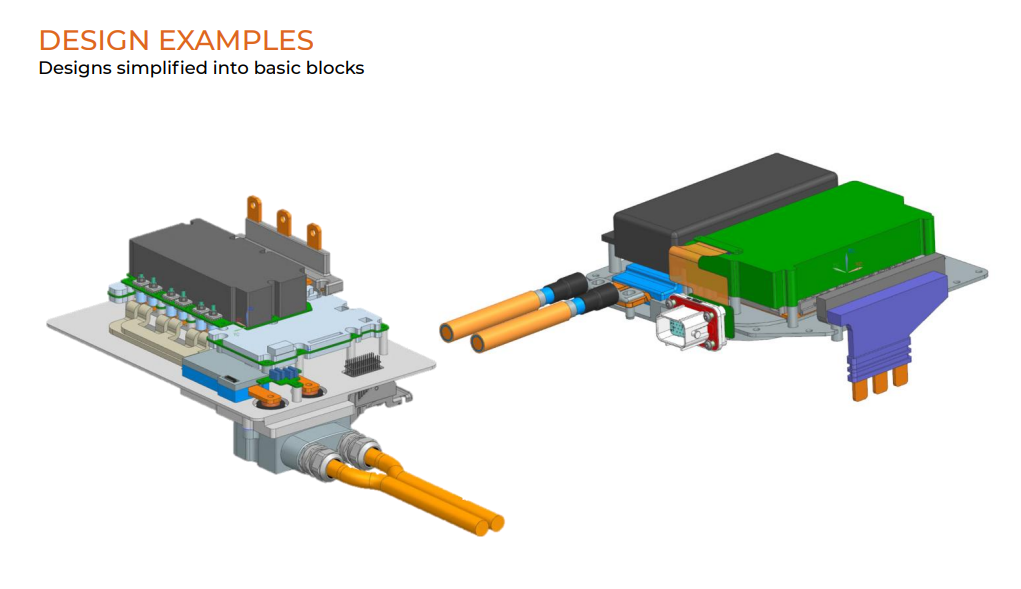
Horizon’s partnership with Motion Applied was mentioned by Brandon Robinson during the conference call with investors. Motion Applied, formerly known as McLaren Applied, will make customized silicon carbide motor drive inverter to power the electrical motors responsible for running the Cavorite X7’s lift fans. Besides converting the DC current originating at the batteries into AC current for the motors, the inverter based on Motion Applied’s MCU-X features lower cooling requirements, which make air-cooling possible unlike heavier and more convoluted cooling approaches.
“Last month, we partnered with Motion Applied, former high-performance technology arm of Formula One’s McLaren Group. Pretty exciting. Now an independent Tier 1 technology provider, Motion Applied is strengthening our capabilities in power electronics, advanced systems integration, testing, and analysis. As our aircraft development continues to accelerate, having the right technical partners becomes increasingly important, and Motion Applied adds world class depth to our engineering ecosystem.” – Brandon Robinson, Co-Founder and CEO of Horizon Aircraft (16th of January 2026 conference call)
“How do we ensure our vertical lift system meets our high-performance standards?
By partnering with the team that has powered championship-leading race cars for more than 30 years.We considered many companies for this partnership, but ultimately it is Motion Applied innovation, deep expertise, and ability to rapidly design, manufacture, and test in-house that provides a great advantage.” – Tom Brassington, Horizon Aircraft’s Chief Technology Officer (4th of December 2025)
“We’re proud to partner with Horizon Aircraft on its groundbreaking Cavorite X7 aircraft. The Company’s innovative approach to the VTOL challenge reflects a design philosophy and engineering mindset that resonates deeply with Motion Applied. We’re excited by the opportunity this collaboration presents to advance our inverter technology to new heights in support of Horizon Aircraft’s ambitious objectives.” – Samir Maha, Chief Executive Officer of Motion Applied (4th of December 2025)

Motion Applied
- Formerly known as McLaren Applied
- Headquartered in Woking, Surrey, UK
- Formed after merger of McLaren Composites and TAG Electronics
- Founder: Ron Dennis
- Brands
- AMPEX
- ATLAS
- EDGE
- Fleet Connect
- TAG
- Industries:
- Aerospace
- Automotive
- Defense
- Marine
- Mining
- Motorsport
Video describing the partnership between Horizon Aircraft and Motion Applied (view below):

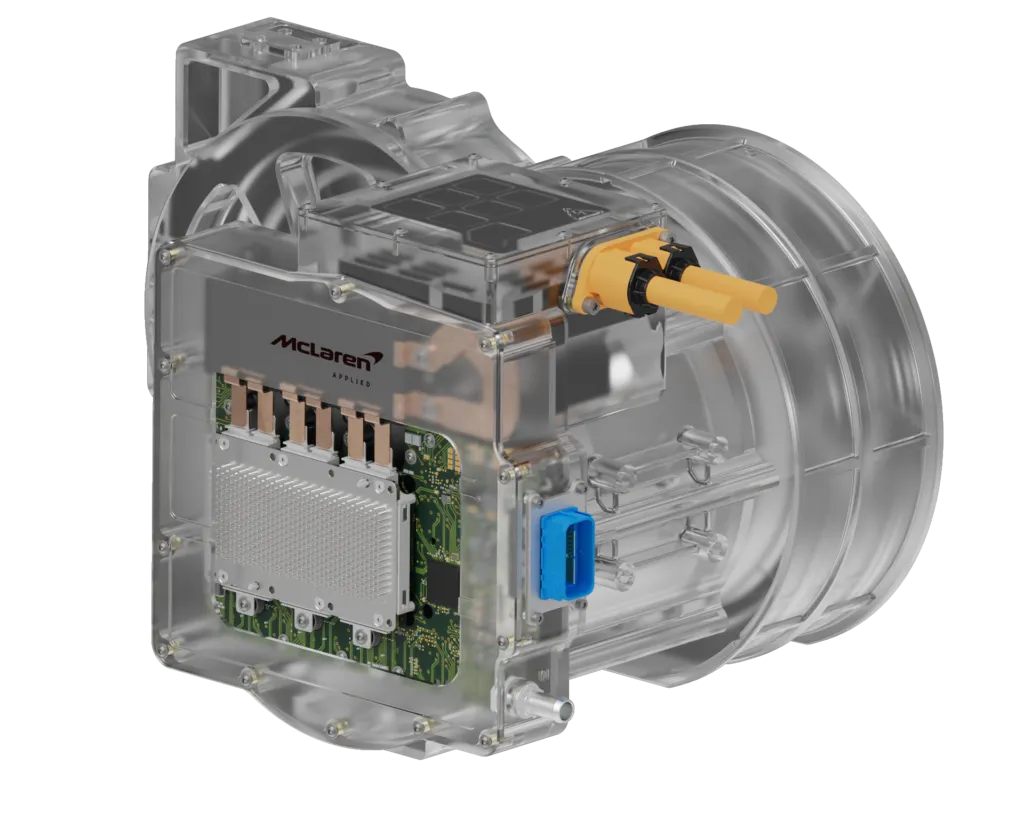
MCU-X Integrated SiC Inverter Platform (Customized for Cavorite X7)
- Specially designed air-cooled silicon carbide motor drive inverter
- Responsible for conversion of DC power from aircraft’s batteries into AC to run the electric motors
- Planned weight of less than 3kg
- Provides faster and more efficient power transfer
- Reduced cooling requirement (air cooled possible)
- Positive impact in aircraft efficiency, power density, and range
Running on Full Batteries
When the topic turned to the batteries responsible for providing part of the energy required during vertical hover, Brandon Robinson revealed that while Horizon is still looking into procurement of the cells, they have been working on their own unique battery design.
“On the battery pack side, we’re going to be looking to procure the cells, but we have a really cool opportunity and an exceptional design already, I think, for a unique battery pack that’s simple, that’s safe. And again, we don’t need 2,000 pounds of batteries on board like all electric folks. We have a hybrid engine that is producing a lot of electricity, and just the way the aircraft hovers, it does not burn as much energy as you might think in hover.” – Brandon Robinson, Co-Founder and CEO of Horizon Aircraft (16th of January 2026 conference call)
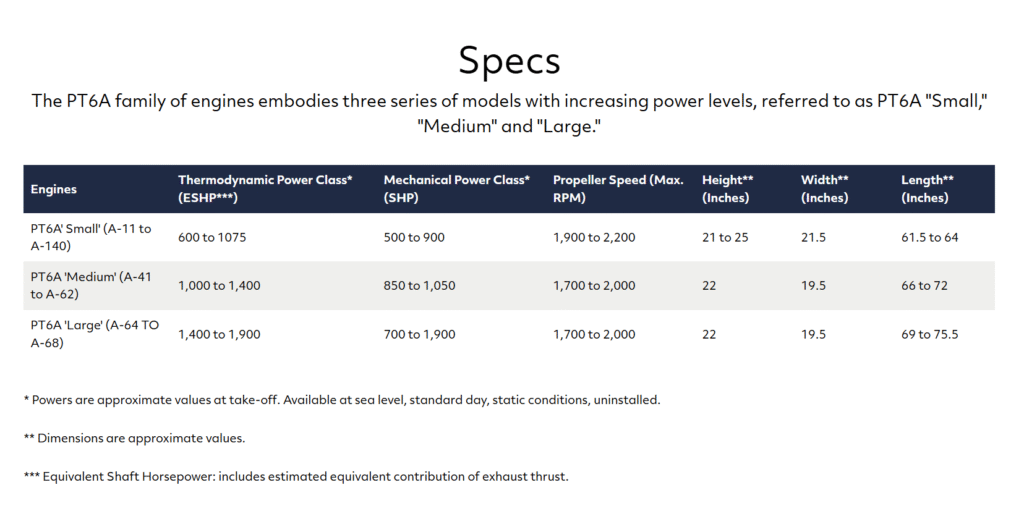
Pratt & Whitney’s PT6A
“Our near-term goal is to complete the design and manufacture of the full-scale X7 prototype by the end of 2026 with initial testing targeted for early 2027. It’s a critical milestone in our top priority that underpins a future certification, customer engagement, and potential revenue opportunities.”
“We have already made strong progress in recent months across a number of fronts on the progression of the X7 development program. Our collaboration with Pratt and Whitney, a global recognized leader in propulsion systems, represents an important validation of our technical approach, and provides us with access to deep expertise that we advance the X7’s propulsion architecture. This is a strategically significant step as we advance our full-scale prototype program.” – Brandon Robinson, Horizon Aircraft Co-Founder and CEO (October 14, 2025)
In October of 2025, Horizon announced their selection of Pratt & Whitney Canada’s PT6A engine, which was an obvious choice considering the PT6’s legendary reliability. The Canadian legacy of the PT6 as well as the contribution some of the members of Horizon’s Can-Do Crew have made at Pratt & Whitney Canada before joining Horizon, are covered by eVTOL buzz in our in-depth article linked here: article
In a statement to eVTOL buzz, Horizon’s Technical Expert John Wyzykowski provided his unique insight of 3 decades at Pratt & Whitney Canada, and explained why the PT6 is the “perfect choice” for the Cavorite X7:
“Having worked over 30 years at Pratt & Whitney Canada developing gas turbine engines for numerous business jet and commuter applications, I was able to apply firsthand the technology and durability philosophy of their engine design system. This, coupled with the inherent adaptability and continuous improvement of the PT6, made it a perfect choice for the unique installation, power generation and reliability requirements of our aircraft.” – John Wyzykowski, Technical Expert at Horizon Aircraft

John Wyzykowski
Technical Expert at Horizon Aircraft
- Former Head of Propulsion at Lilium
- Former Senior Director of Engine Development Programs at Pratt & Whitney Canada
- Former Director of Turbofan Engines at Pratt & Whitney Canada
- 40 years of expertise in aviation
- Pratt & Whitney Leadership Awards
- Issued by Pratt & Whitney · November 2020
- President’s Award
- Issued by Pratt & Whitney Canada · September 2019
“Choosing the right engine for our full-scale hybrid aircraft was essential. The PT6A is exactly what we need for our full-scale aircraft, and building a relationship with Pratt & Whitney Canada, such a respected, global leader right here at home, is another amazing win.“– Brandon Robinson, Horizon Aircraft Co-Founder and CEO (October 14, 2025)
Video eVTOL buzz filmed at the 2025 NBAA-BACE showing Pratt & Whitney’s PT6A engine (display model):
Specs & Performance: Where X7 Fits In 📊
While Horizon’s official specs may slightly change as the Cavorite X7 enters production, publicly available data indicate compelling performance characteristics:
Cavorite X7 (Targeted)
- Cruise Speed: ~250 mph+
- Range: 500 + miles with reserves
- Capacity: 6–7 passengers with payload flexibility
- Propulsion: Hybrid electric (with future hydrogen evaluation)
- Vertical Lift Tech: Patented fan‑in‑wing design
This puts the Cavorite X7 closer to regional commuter and utility aircraft than the typical short‑range air taxi, which is a strategic choice aimed at markets where speed, range, and payload are needed most by operators.
“Markets that we believe will develop sooner and scale faster than many short-range, infrastructure-dependent, all-electric eVTOL uses. With an expected cruising speed of almost 250 miles an hour, an estimated 500-mile range with fuel reserves, and a 1,500-pound useful load, the X7 will have the potential to fly almost twice the speed of a comparable helicopter with significantly lower operating costs. We believe this positions Horizon Aircraft uniquely with the advanced air mobility ecosystem.” – Brandon Robinson, Co-Founder and CEO of Horizon Aircraft (16th of January 2026 conference call)
Need For Speed
A roughly 250 mph cruise speed offered by the Cavorite X7 is more than an impressive number on a spec sheet. This significance will be felt as air ambulance crews are racing towards heart centers and Level 1 trauma centers, special forces teams are quietly speeding in and out of operation zones, and transplant organs are being flown out for a second journey in sustaining the lives of people desperately needing them. It is these situations, and many more where the extravagant work performed by Horizon’s Can-Do Crew 🇨🇦 will have a ripple effect on the many heroes that will depend on the Cavorite X-7 to accomplish their missions in the most effective and safest way possible.
Why Horizon’s Path Matters 🛩
The broader eVTOL sector is at a turning point. Many developers chasing all‑electric designs face range and energy density limits. Horizon’s hybrid philosophy prioritizes practical mission capabilities today while opening doors to the energy sources of tomorrow (such as hydrogen).
By focusing on hybrid performance, smooth transitions (between vertical and horizontal flight) thanks to its fan-in-wing design, and partner‑backed hardware, Horizon has positioned the X7 as a realistic candidate for operational service in sectors such as:
- Regional passenger transport
- Medical evacuation and critical logistics
- Emergency response
- Defense and maritime support
IFR and FIKI
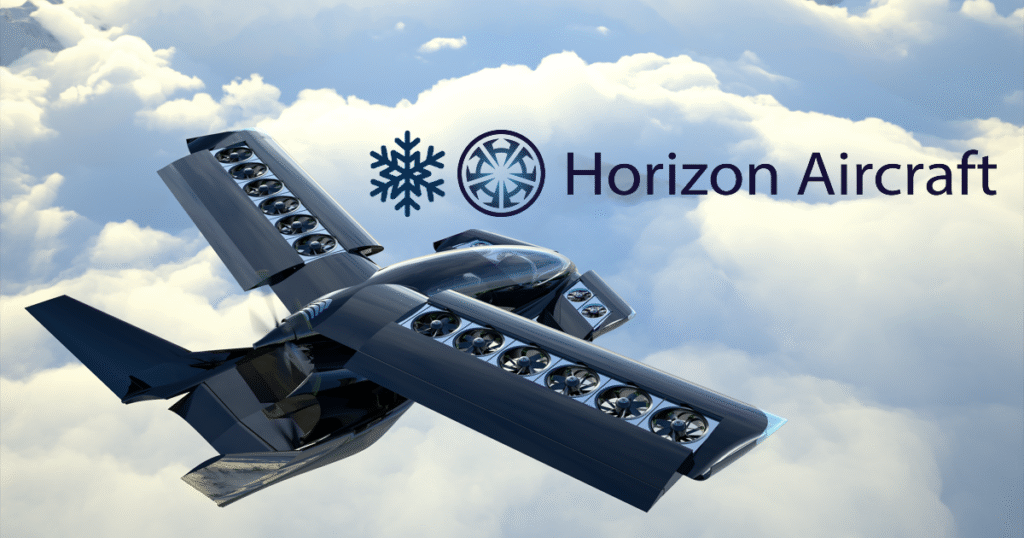
“I flew jets in the Air Force for the better part of two decades. I have been in bad weather situations that were unpredicted and, you know, bad weather, snowy weather, inadvertent icing, unexpected winds, you know, headwinds, etc., etc. Having the flexibility to have an aircraft that can fly in clouds under IFR certified routes, just like the normal commercial aircraft, was critically important for us to design right from the beginning.” – Brandon Robinson, Co-Founder and CEO of Horizon Aircraft (16th of January 2026 conference call)
Compared to IFR capable helicopters such as the Bell Boeing MV-22 Osprey, and Leonardo AW609, Horizon’s Cavorite X7 offers similar speed and range at a fraction of the cost, and with increased reliability.
“This is a beast of an aircraft that is going to be tough, built for the real world, as we say. So, from the beginning, that was the plan and that is coming together really well.” – Brandon Robinson, Co-Founder and CEO of Horizon Aircraft (16th of January 2026 conference call)
“We have a climatic wind tunnel that’s pretty close to us. So, when the time is right, we can build a wing section and take it to the climatic wind tunnel, turn it down to minus 40 degrees Fahrenheit, and throw all sorts of snow and freezing precipitation at it.” – Brandon Robinson, Co-Founder and CEO of Horizon Aircraft (16th of January 2026 conference call)
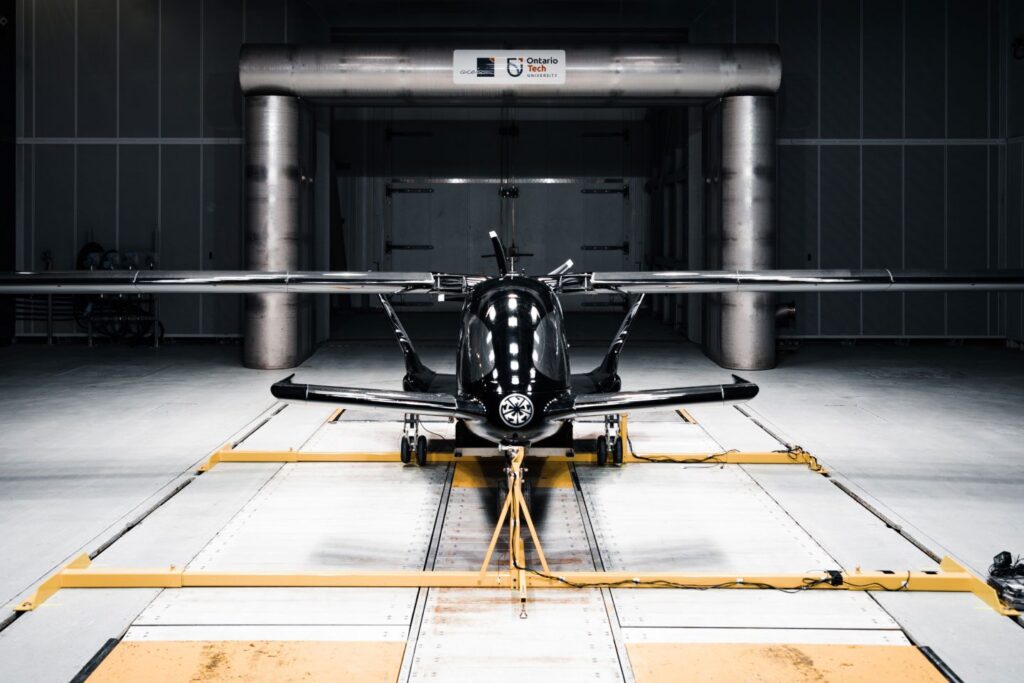

Ontario Tech University (University of Ontario Institute of Technology)
- Located in Oshawa, Ontario
- ACE (Automotive Centre of Excellence)
- Founded by General Motors of Canada, the Government of Ontario, the Government of Canada and the Partners for the Advancement of Collaborative Engineering Education (PACE)
- AD2M Laboratories
INSAT Program Grant
Horizon launched a new collaborative all-weather vertical propulsion project, backed by a non-dilutive grant from Canada’s INSAT (Initiative for Sustainable Aviation Technology) program.
The team will test a suite of advanced icing-mitigation technologies on the Cavorite X7, including:
- Ice-phobic coatings
- Electrothermal anti-icing systems
- Enhanced ice detection sensors
Together, these systems push the Cavorite X7 toward certification for IFR and FIKI operations, giving the hybrid electric eVTOL aircraft the ability to fly when most helicopters cannot.
“With an INSAT program, Initiative for Sustainable Aviation Technology, our INSAT program grant awarded to Horizon Aircraft and our two collaborative partners for an estimated $10.5 million all weather eVTOL project, we will directly advance our all weather operational pathway. As previously highlighted, all-weather capability is a key differentiator for our aircraft and a critical requirement for many commercial and military missions.” – Brandon Robinson, Co-Founder and CEO of Horizon Aircraft (16th of January 2026 conference call)

INSAT program (The Initiative for Sustainable Aviation Technology)™
- Funds innovations in transportation, energy, information technology
- Focus on 4 pillars:
- Hybrid and alternative propulsion
- Aircraft architecture and systems integration
- Transitions to alternative fuels
- Aircraft support infrastructure and operations
- Initiative started in 2023 by STRIX, a non-profit committed to strengthening Canadian innovation and research collaboration in the aerospace industry
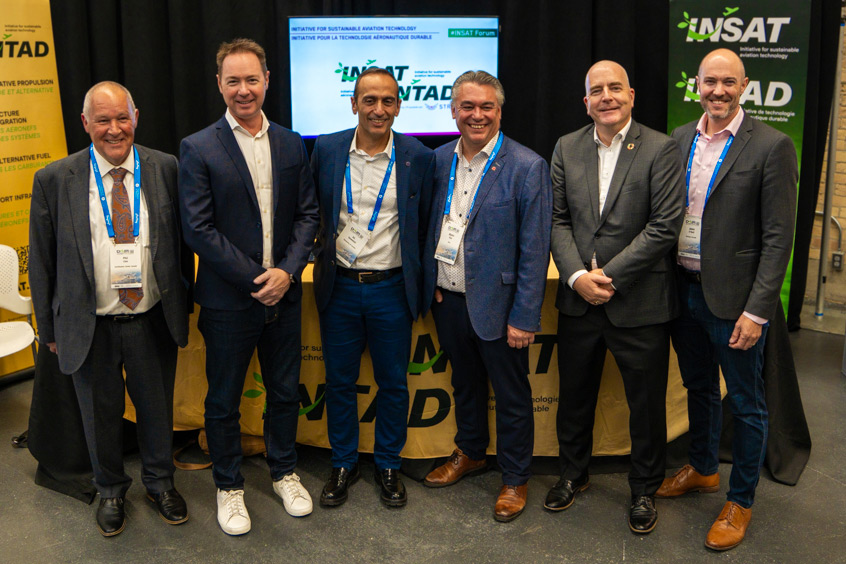
“The grant [INSAT program grant] is particularly meaningful for Horizon Aircraft as it supports our development work without shareholder dilution, something we are especially mindful of going forward, and also a source of non-diluted funding we expect to continue pursuing in the years ahead.” – Brandon Robinson, Co-Founder and CEO of Horizon Aircraft (16th of January 2026 conference call)
Certification on the Horizon
Horizon also benefits from its close partnership with Cert Canada, an advanced aviation certification consultancy founded by industry veteran Dr. John Maris. A highly respected test pilot, engineer, and certification expert, Mr. Maris brings deep experience in complex airworthiness pathways, including IFR, FIKI, hybrid-electric propulsion, and new-category operations. As a Horizon board member and senior adviser, his involvement strengthens the credibility of the Cavorite X7’s all-weather certification roadmap, ensuring its capabilities are not only innovative but will be certifiable and regulatory-ready.

Cert Center Canada
- Founded in 2016
- Headquartered in Montreal, Canada
- CEO and founder: Dr. John Maris
- Independent center assisting clients with:
- Training
- R&D
- Prototype Evaluation
- IP Licensing
- Systems Development
- Flight testing
- Certification
- Research simulator
- Synthesis Tools
- Development and certification
“We are starting certification work as we speak. So, working through, you have to be technical to understand it, aircraft functional hazard analysis, writing a certification basis, speaking with Transport Canada. All of these activities are ongoing, of course, and as everyone knows, I’ll remind them, we have a great partnership with Certification Centre Canada, the founders on our Board of Directors, Dr. John Maris.” – Brandon Robinson, Co-Founder and CEO of Horizon Aircraft (16th of January 2026 conference call)
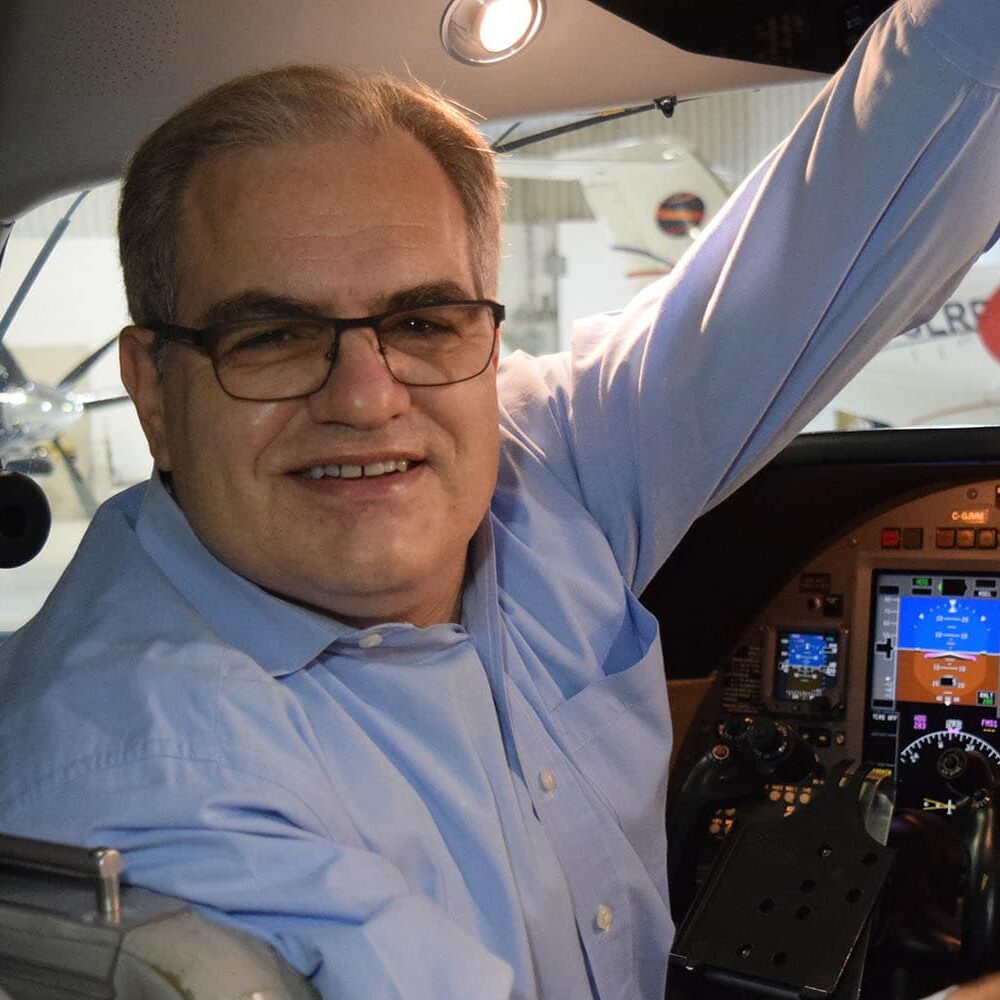
Dr. John Maris, PhD.
- Founder of Cert Center Canada
- Board Member and Senior Adviser at Horizon Aircraft
- Chief Test Pilot at Pratt & Whitney Canada’s RTX Hybrid-Electric Flight Demonstrator project
- Canadian Aviation Hall of Fame member
- 6,300 pilot hours
- Kelly Johnson Award in 2025 for outstanding Test Pilot Engineering
- Issued by Society of Flight Test Engineers
Cost Per Seat Mile: Where a $1 Per Seat Mile Can Make an Operator Serious Cash 💸
Horizon’s projected cost per seat mile, is another demonstration of where the practicality of the Cavorite X7’s design and no-nonsense approach makes a lot of CENTS and dollars!
“We are projecting a cost per seat mile around a buck. It’s largely a function of two things. One is the performance of our machine. Our operating performance is significantly better than our peer group. We are going twice as fast for example. It is also a function of operating cost. As a result of reduced maintenance, fuel costs, all of the costs that lead into the operating costs of the aircraft, we are projecting a cost per seat mile that sits around a buck. If you start looking at what that means for a trip, whether that’s New York to Boston, or that regional range, that 100 to 500 mile range, the impact to operators for a machine like this, compared to whether its an advanced air mobility machine or legacy helicopters, is significantly improved economics for the operators.” – Brian Merker, CFO of Horizon Aircraft
Prediction Fulfilled: The Multi-Role Cavorite X7
“Mission specific aircraft are interesting because we’ve designed this from the beginning. So we’ve made modifications to the fitment and interior cabin volume and door sizing such that you can get an injured person on a gurney in and out of the aircraft for MEDEVAC, which makes a lot of sense. For the different mission sets, with the floor is stressed for loading various equipment across a cargo sort of fitment as well. It’s not a matter of completely tailoring the entire aircraft to a certain mission.” – Brandon Robinson, Co-Founder and CEO of Horizon Aircraft (16th of January 2026 conference call)
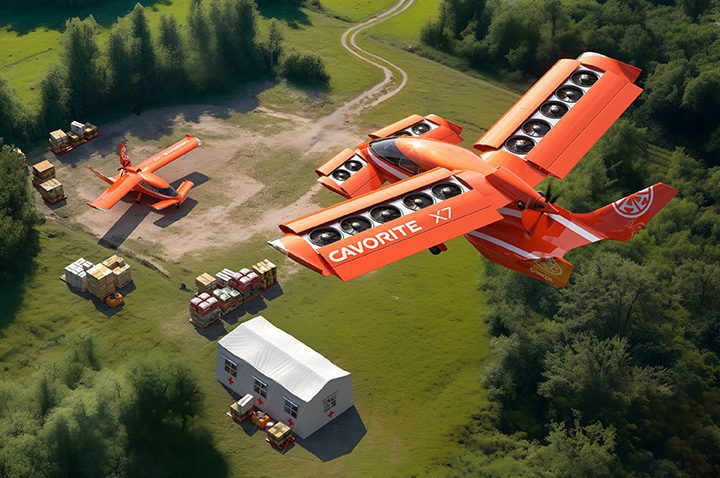
(Source: Horizon Aircraft)
Besides the safety, performance, and dependability that make the core values of Horizon Aircraft, the multi-role concept of the Cavorite X7 is a major strength of its platform. This “Swiss army knife” approach is perfect out in the field, whether it’s a battlefield, ranch, or oil-field. Not only is the Cavorite X7 rugged enough for the harsh rural environments found in many places across the planet, it can be elegant for high society and VIPs that want a refined way of travel through urban environments or even remote getaways!
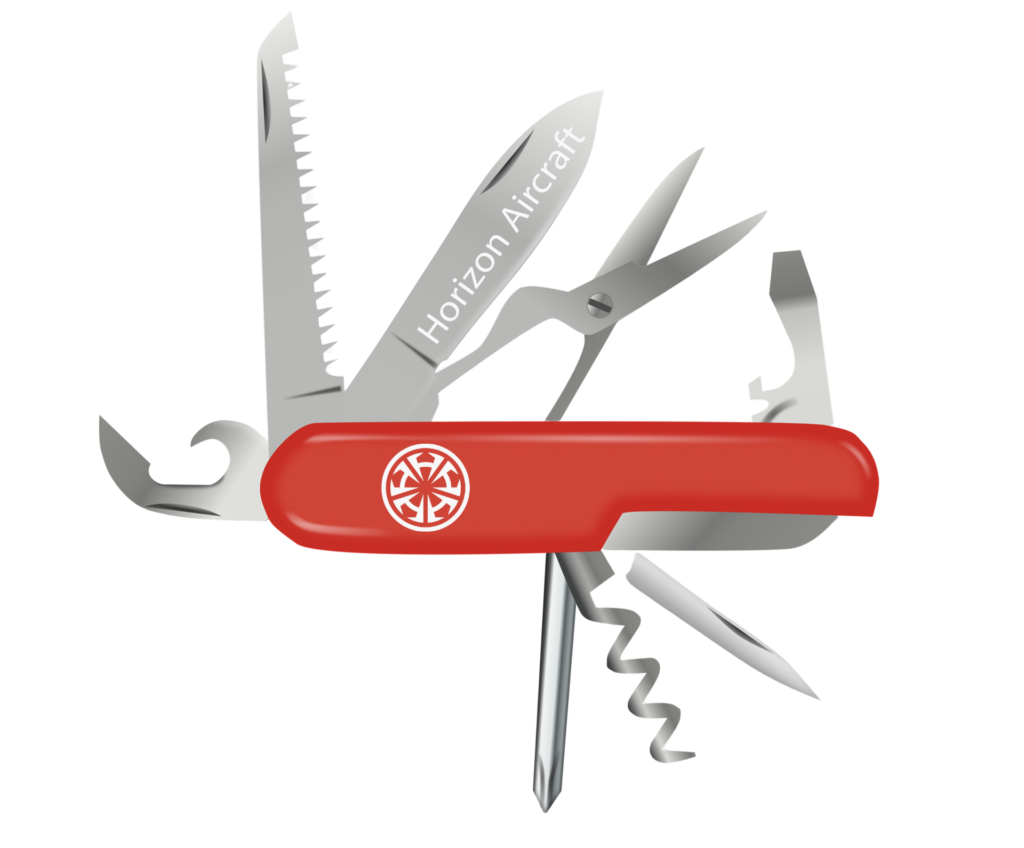
Multi-Role Capability of the Cavorite X7
- Passenger services
- Private / VIP
- Commercial
- Commuter (UAM)
- Regional Air Mobility (RAM)
- Tourism
- Air Ambulance / MEDEVAC
- Organ transplant transportation
- Cargo
- Military (Personel, Cargo, Surveillance, MEDEVAC, Maritime warfare)
- Oil and Gas (offshore and onshore)
- Ranching / Agriculture / Wildlife Management
- Windmill / Powerline maintenance/monitoring
“We’ve created a kind of “Swiss army knife” in the interior cabin volume so that we can quickly switch it from cargo. Maybe it runs cargo missions at night and then you can flip it into a business travel. You could snap in some seats in business travel during the day.” – Brandon Robinson, Co-Founder and CEO of Horizon Aircraft (16th of January 2026 conference call)
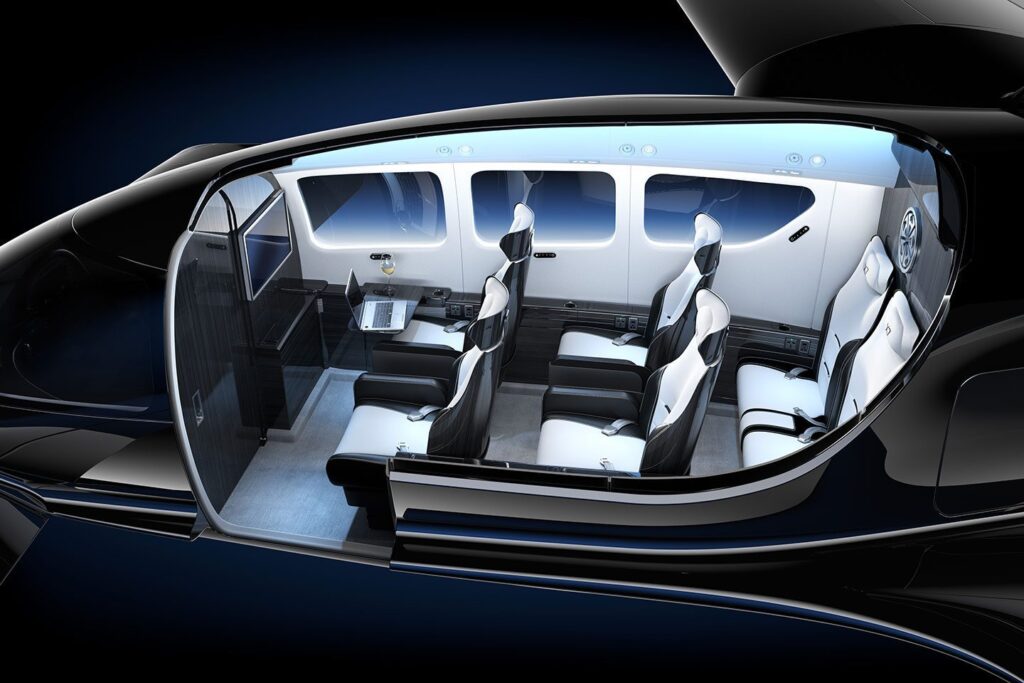
CEO Brandon Robinson’s statement from the January 2026 investor’s call is exactly what we predicted in an eVTOL buzz article from back in July 22nd, 2025 about the Cavorite X7:
“Taking a VIP to a downtown vertiport for a posh business dinner or transporting some critical high value machine parts from a specialized machine shop to a factory or offshore oil platform in time to save the day will all be possible with the Cavorite X7.” – eVTOL buzz (July 22nd 2025 article titled: Why Horizon Aircraft’s ultra-dependable Cavorite X7 will be the “go to” long distance eVTOL)

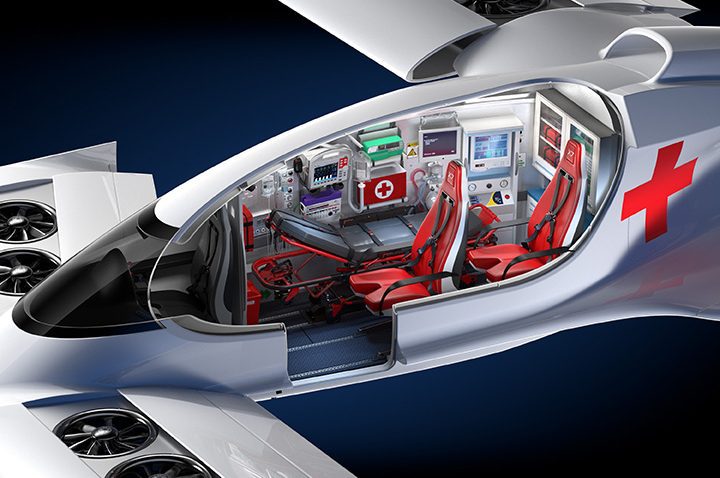
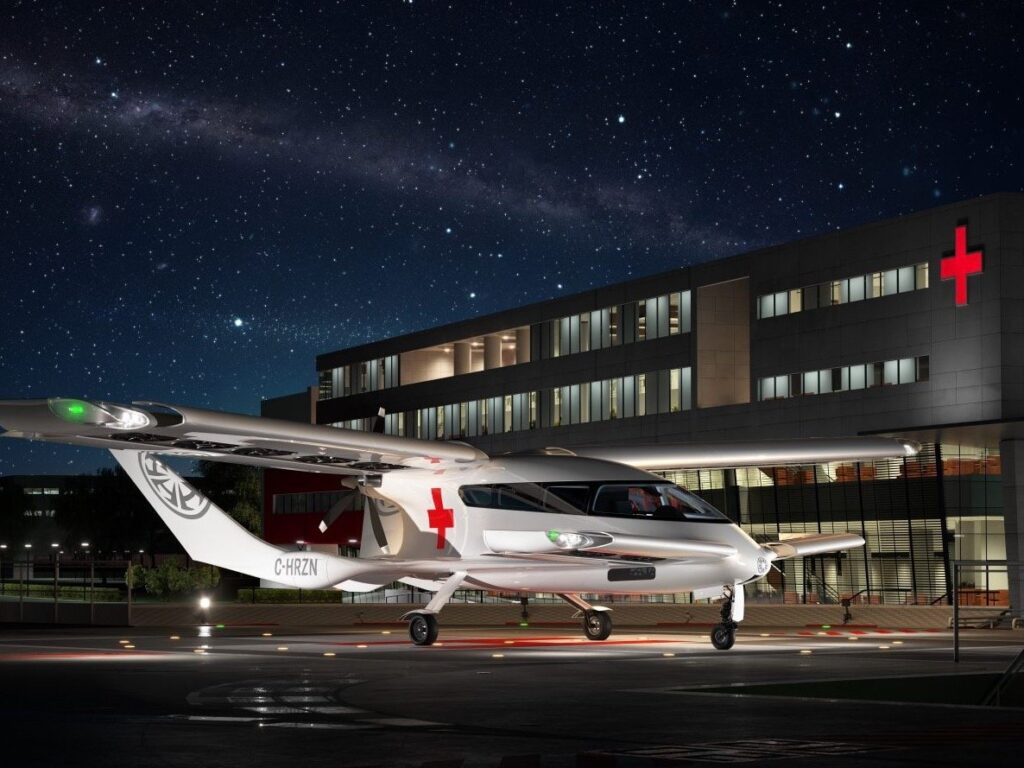
“Again there will be a refurb for MEDEVAC with all the necessary life-saving equipment on the inside and oxygen and all that sort of stuff, but we are going to start on just completing our full-scale prototype aircraft.That will have the requisite fitment and sizing for multi mission sort of capabilities once they start rolling off the low rate initial production line.” – Brandon Robinson, Co-Founder and CEO of Horizon Aircraft (16th of January 2026 conference call)
What to Watch Next 🔭
“Another challenge that people probably don’t realize unless they’re in the business is, again, flight controls. This is a fly-by-wire machine. There’s a lot of moving parts and many ways less so than some of the tilt rotor and tilt wing mechanisms that are out there.
So many ways simplified, but still a complicated problem to solve on the flight control side. Thankfully, we have some great partnerships building on that front too. Again, we’ll be able to announce some things hopefully fairly soon.“ – Brandon Robinson, Co-Founder and CEO of Horizon Aircraft (16th of January 2026 conference call)
Milestones on the Horizon
- Full‑scale prototype complete by end of year, with testing starting in ~18 months
- Expanded partnerships
- Progress on certification engagements with regulators
As, time flies further into 2026, we can clearly see that Horizon Aircraft’s Cavorite X7 is no longer just a brilliant concept on paper. With successful flight transition tests, engineering momentum, commercial interest and viability, as well as strategic partnerships, the Cavorite X7 is shaping up to be one of the most realistic high‑performance hybrid eVTOLs in the journey toward operational regional air mobility (RAM). As certification timelines firm up in coordination with Cert Center Canada and full-scale prototypes begin testing, Horizon’s philosophy of practical innovation is poised to reap the rewards of all the hard work that has been performed and will continue to be made by Horizon’s Can-Do Crew. 🇨🇦
Stay tuned to eVTOL buzz ✈️ for test flight updates, tech deep dives, and exclusive interviews on the Horizon as this story evolves.
More Info:
Horizon Aircraft Provides Business Update and Second Quarter of Fiscal 2026 Results: click here
Motion Applied (official website): click here
Horizon Aircraft partners with Motion Applied: click here