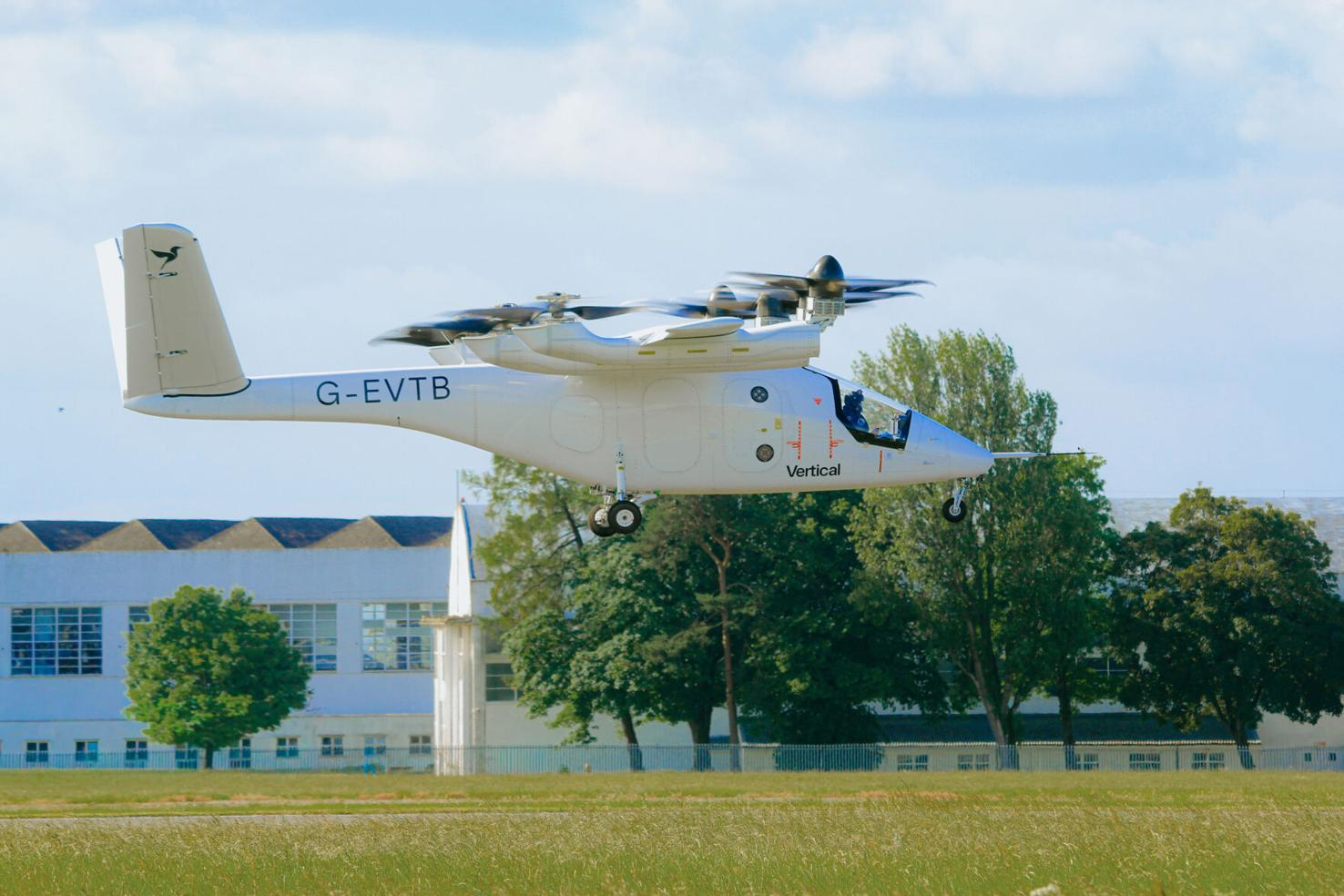
Vertical Test Pilot Paul Stone conducted the latest prototype's maiden flight at 8:49 BST on 5 June 2026.
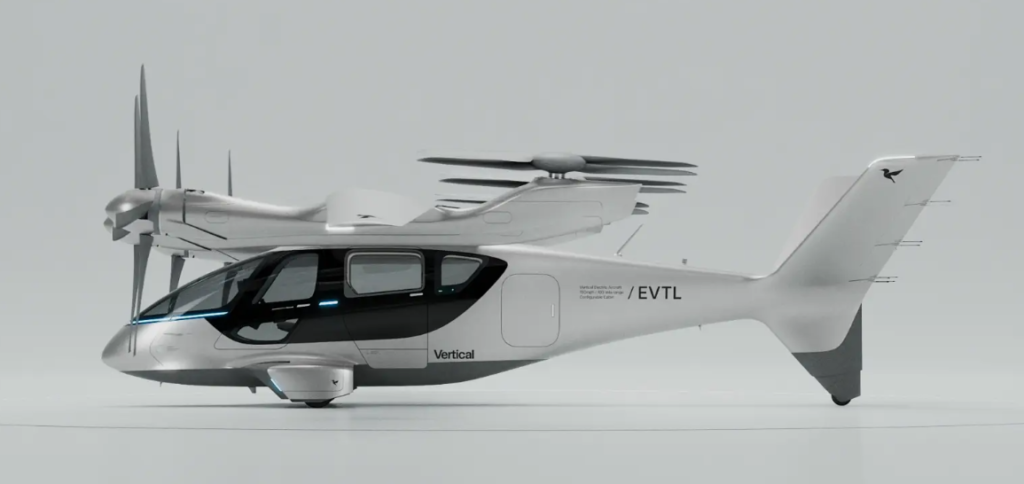
The UK-based eVTOL developer, Vertical Aerospace (NYSE: EVTL) announced that its latest prototype completed its first piloted flight on June 5 at the company’s Flight Test Centre. The aircraft, introduced in December of last year, becomes the second full-scaleVX4 in Vertical’s current active flight-test fleet and arrives at a pivotal point in the programme as the company prepares for Critical Design Review (CDR), a major milestone that will establish the design baseline for certification. Having a second aircraft for certification testing can help Vertical accelerate in one of the industry’s most closely watched certification efforts.
The maiden flight was conducted by Vertical test pilot Paul Stone after the aircraft received a Permit to Fly from the UK Civil Aviation Authority following a series of ground testing and validation activities.
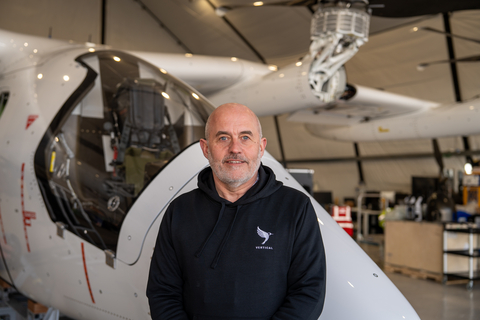
Paul Stone
Test Pilot at Vertical Aerospace
Over 200 aircraft types
4,800 flight hours
Former Royal Navy Pilot (20 years)
Sea Harrier pilot
Empire Test Pilot School
Former Chief Test Pilot at Volocopter
BAE Systems
Typhoon Future Capability Director
Director of Flight Operations
Chief Test Pilot for Combat Aircraft
Former Chief Pilot for the Shuttleworth Collection
Education:
Southampton University
BEng (Aeronautical Engineering)
Lancaster University
Distinction (MBA)
“Getting our latest prototype into flight testing is an important milestone because it allows us to learn faster in real world conditions and keep building momentum towards certification. Expanding the flight test fleet will help us validate the aircraft more quickly, reduce risk, and move more efficiently towards bringing Valo into service.” – Stuart Simpson, CEO of Vertical Aerospace
Headquartered in Bristol, England 🇬🇧
NYSE: EVTL
Established in 2016
Founded by Stephen Fitzpatrick (Founder of Ovo Energy and former owner of F1 Manor Racing team)
CEO: Stuart Simpson
Former Chairman: Dómhnal Slattery
Manufacturer of Valo all-electric eVTOL
Plans for future hybrid-electric powered eVTOL capable of 1,000 mile range
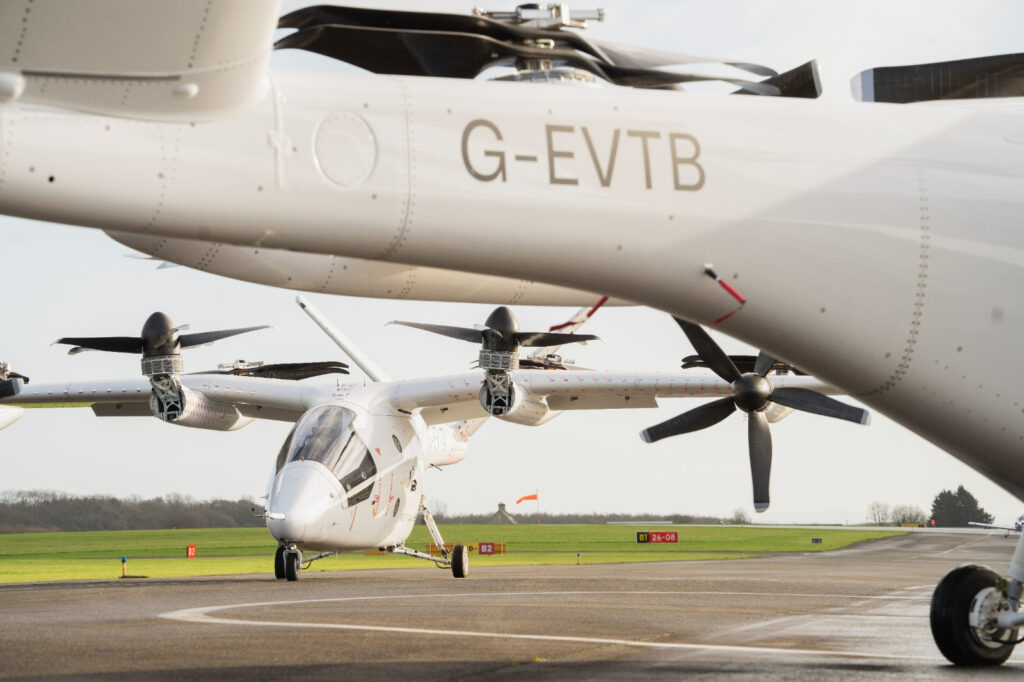
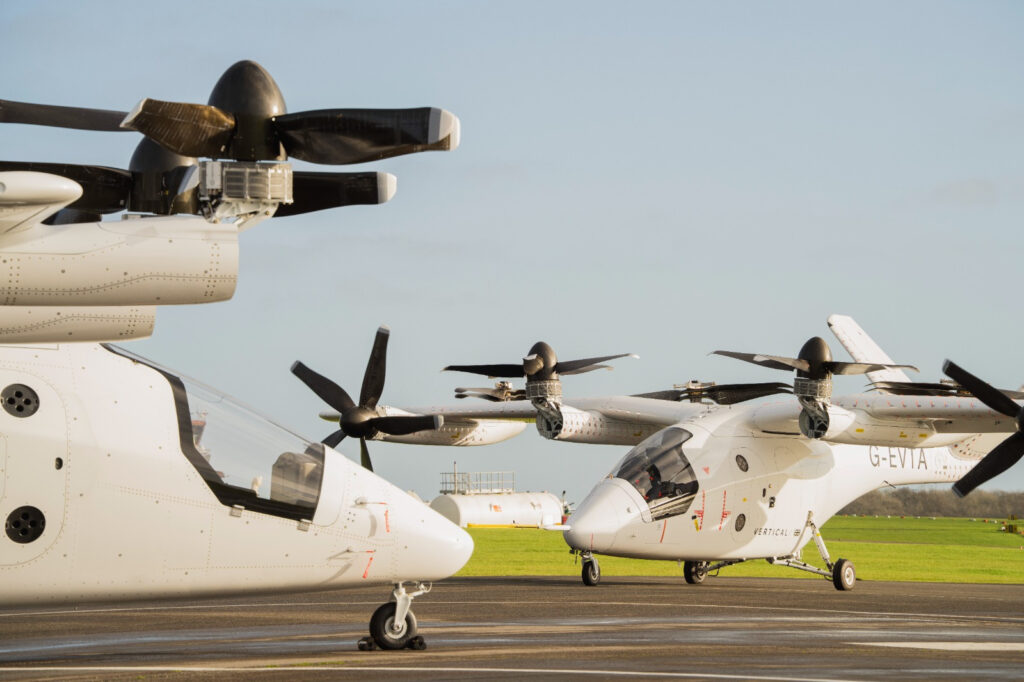
Both VX4 prototypes (G-EVTA and G-EVTB) – (Image Courtesy of Vertical Aerospace)
While first flights are often viewed as symbolic milestones, the significance of this aircraft lies in what comes next. With two aircraft now flying, Vertical can conduct multiple test activities in parallel, increasing the pace at which certification-relevant data can be gathered.
The company’s original VX4 prototype continues to perform transition-flight testing after successfully completing multiple piloted transitions between vertical and wingborne flight. Meanwhile, the newly introduced second aircraft will progress through the same flight-test envelope, including thrustborne hover operations, conventional wingborne flight and transition testing.
Latest VX4 aircraft to join the flight-test programme
Completed maiden piloted flight on 5th of June 2026
Will progress through thrustborne, wingborne, and transition-flight testing to expand certification dataset
Back in December, Vertical CEO Stuart Simpson, explained the significance of having another full-scale VX4 prototype for testing:
“As we look ahead to 2026, the addition of our final prototype marks an important step in closing out our prototype flight test programme and maintaining momentum towards commercialization. Our test pilots are eager to get this aircraft into the air.” – Stuart Simpson, CEO of Vertical Aerospace
Both VX4 prototypes (G-EVTA and G-EVTB) – (Image Courtesy of Vertical Aerospace)
For aircraft developers pursuing certification, additional flight-test capacity can have a meaningful impact on programme timelines. As test campaigns become increasingly complex, the ability to dedicate separate aircraft to different objectives helps reduce bottlenecks and allows engineering teams to validate systems, software and flight characteristics more efficiently.
The latest flight also marks the final prototype expected to join Vertical’s fleet before completion of Critical Design Review. In traditional aerospace development programmes, CDR represents one of the most important engineering milestones, confirming that an aircraft’s design is sufficiently mature to support certification and production planning.
Following CDR, Vertical intends to begin preparations for assembly of its first pre-production aircraft, moving the programme into its next phase of development.
The milestone comes as the broader eVTOL sector enters a more demanding stage of maturity. After years focused on concept development and prototype demonstrations, leading manufacturers are now being judged primarily on their ability to achieve regulatory certification and scale manufacturing.
Vertical’s strategy differs from some competitors by relying on full-scale piloted aircraft that closely resemble the intended production configuration. The company says its prototypes share the architecture, systems and flight characteristics planned for the commercial version of its Valo aircraft, enabling certification-focused testing earlier in the programme.
Beyond supporting certification efforts, the new aircraft is also expected to play a role in public flight demonstrations during the coming year. Once testing in its all-electric configuration is complete, Vertical plans to retrofit this second aircraft for hybrid-electric flight testing.
The decision reflects a growing industry interest in hybrid-electric propulsion as developers seek to expand mission capabilities beyond urban air mobility. While battery-powered all-electric aircraft remain the primary focus for short-range passenger transport, hybrid-electric systems could offer greater range, endurance and payload capacity for applications such as defence, logistics and regional transportation.
Vertical’shybrid-electric ambitions place it among a growing number of companies exploring how advanced air mobility technologies might serve markets beyond traditional air taxi operations.
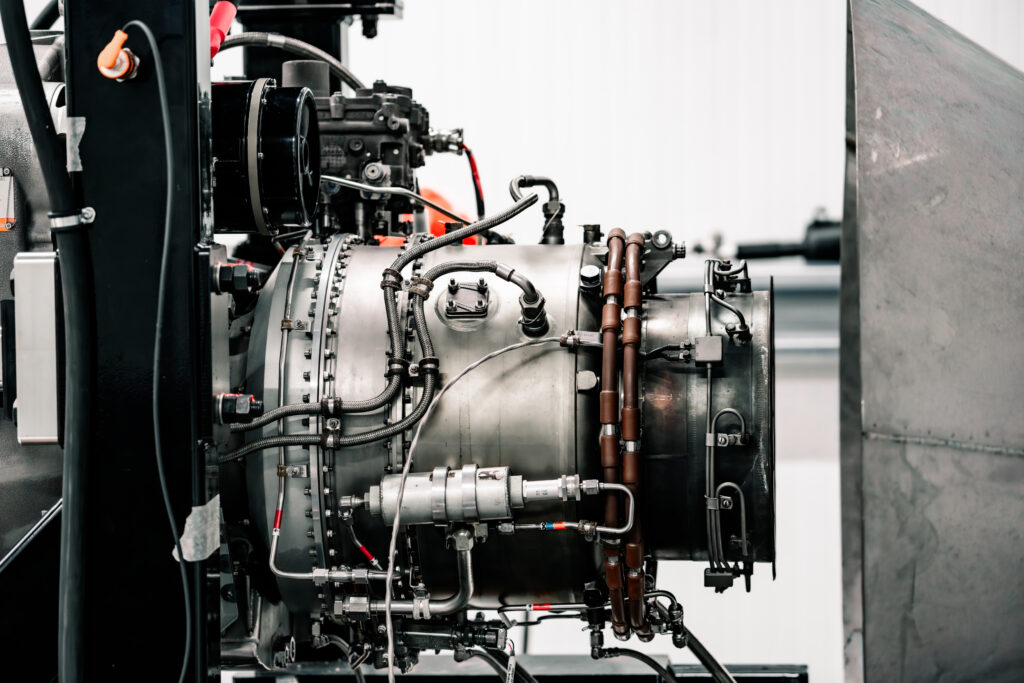
Vertical’s hybrid powertrain for its Valo eVTOL (Photo courtesy of Vertical Aerospace)
The company continues to market its Valo aircraft as a piloted, four-passenger eVTOL designed to deliver zero-emission flights while maintaining the safety standards expected of commercial aviation. Vertical says it has secured approximately 1,500 pre-orders from customers including American Airlines, Avolon, Bristow, GOL and Japan Airlines.
With a second aircraft now airborne and Critical Design Review approaching, Vertical enters the second half of 2026 with increasing momentum. The next major challenge will be converting that momentum into certification progress as the drive to bring commercial eVTOL aircraft into service moves into a new phase.
{"id":"6","mode":"form","open_style":"in_place","currency_code":"USD","currency_symbol":"$","currency_type":"decimal","blank_flag_url":"https:\/\/evtolbuzz.com\/wp-content\/plugins\/tip-jar-wp\/\/assets\/images\/flags\/blank.gif","flag_sprite_url":"https:\/\/evtolbuzz.com\/wp-content\/plugins\/tip-jar-wp\/\/assets\/images\/flags\/flags.png","default_amount":500,"top_media_type":"featured_image","featured_image_url":"https:\/\/evtolbuzz.com\/wp-content\/uploads\/2025\/06\/cropped-logo-20-square-black-200x200.png","featured_embed":"","header_media":null,"file_download_attachment_data":null,"recurring_options_enabled":true,"recurring_options":{"never":{"selected":true,"after_output":"One time only"},"weekly":{"selected":false,"after_output":"Every week"},"monthly":{"selected":false,"after_output":"Every month"},"yearly":{"selected":false,"after_output":"Every year"}},"strings":{"current_user_email":"","current_user_name":"","link_text":"Leave a tip","complete_payment_button_error_text":"Check info and try again","payment_verb":"Donate","payment_request_label":"eVTOL buzz","form_has_an_error":"Please check and fix the errors above","general_server_error":"Something isn't working right at the moment. Please try again.","form_title":"Like the articles at eVTOL buzz? Send us a tip!","form_subtitle":null,"currency_search_text":"Country or Currency here","other_payment_option":"Other payment option","manage_payments_button_text":"Manage your payments","thank_you_message":"Thank you for being a supporter of eVTOL buzz!","payment_confirmation_title":"eVTOL buzz","receipt_title":"Your Receipt","print_receipt":"Print Receipt","email_receipt":"Email Receipt","email_receipt_sending":"Sending receipt...","email_receipt_success":"Email receipt successfully sent","email_receipt_failed":"Email receipt failed to send. Please try again.","receipt_payee":"Paid to","receipt_statement_descriptor":"This will show up on your statement as","receipt_date":"Date","receipt_transaction_id":"Transaction ID","receipt_transaction_amount":"Amount","refund_payer":"Refund from","login":"Log in to manage your payments","manage_payments":"Manage Payments","transactions_title":"Your Transactions","transaction_title":"Transaction Receipt","transaction_period":"Plan Period","arrangements_title":"Your Plans","arrangement_title":"Manage Plan","arrangement_details":"Plan Details","arrangement_id_title":"Plan ID","arrangement_payment_method_title":"Payment Method","arrangement_amount_title":"Plan Amount","arrangement_renewal_title":"Next renewal date","arrangement_action_cancel":"Cancel Plan","arrangement_action_cant_cancel":"Cancelling is currently not available.","arrangement_action_cancel_double":"Are you sure you'd like to cancel?","arrangement_cancelling":"Cancelling Plan...","arrangement_cancelled":"Plan Cancelled","arrangement_failed_to_cancel":"Failed to cancel plan","back_to_plans":"\u2190 Back to Plans","update_payment_method_verb":"Update","sca_auth_description":"Your have a pending renewal payment which requires authorization.","sca_auth_verb":"Authorize renewal payment","sca_authing_verb":"Authorizing payment","sca_authed_verb":"Payment successfully authorized!","sca_auth_failed":"Unable to authorize! Please try again.","login_button_text":"Log in","login_form_has_an_error":"Please check and fix the errors above","uppercase_search":"Search","lowercase_search":"search","uppercase_page":"Page","lowercase_page":"page","uppercase_items":"Items","lowercase_items":"items","uppercase_per":"Per","lowercase_per":"per","uppercase_of":"Of","lowercase_of":"of","back":"Back to plans","zip_code_placeholder":"Zip\/Postal Code","download_file_button_text":"Download File","input_field_instructions":{"tip_amount":{"placeholder_text":"How much would you like to tip?","initial":{"instruction_type":"normal","instruction_message":"How much would you like to tip? Choose any currency."},"empty":{"instruction_type":"error","instruction_message":"How much would you like to tip? Choose any currency."},"invalid_curency":{"instruction_type":"error","instruction_message":"Please choose a valid currency."}},"recurring":{"placeholder_text":"Recurring","initial":{"instruction_type":"normal","instruction_message":"How often would you like to give this?"},"success":{"instruction_type":"success","instruction_message":"How often would you like to give this?"},"empty":{"instruction_type":"error","instruction_message":"How often would you like to give this?"}},"name":{"placeholder_text":"Name on Credit Card","initial":{"instruction_type":"normal","instruction_message":"Enter the name on your card."},"success":{"instruction_type":"success","instruction_message":"Enter the name on your card."},"empty":{"instruction_type":"error","instruction_message":"Please enter the name on your card."}},"privacy_policy":{"terms_title":"Terms and conditions","terms_body":null,"terms_show_text":"View Terms","terms_hide_text":"Hide Terms","initial":{"instruction_type":"normal","instruction_message":"I agree to the terms."},"unchecked":{"instruction_type":"error","instruction_message":"Please agree to the terms."},"checked":{"instruction_type":"success","instruction_message":"I agree to the terms."}},"email":{"placeholder_text":"Your email address","initial":{"instruction_type":"normal","instruction_message":"Enter your email address"},"success":{"instruction_type":"success","instruction_message":"Enter your email address"},"blank":{"instruction_type":"error","instruction_message":"Enter your email address"},"not_an_email_address":{"instruction_type":"error","instruction_message":"Make sure you have entered a valid email address"}},"note_with_tip":{"placeholder_text":"Your note here...","initial":{"instruction_type":"normal","instruction_message":"Attach a note to your tip (optional)"},"empty":{"instruction_type":"normal","instruction_message":"Attach a note to your tip (optional)"},"not_empty_initial":{"instruction_type":"normal","instruction_message":"Attach a note to your tip (optional)"},"saving":{"instruction_type":"normal","instruction_message":"Saving note..."},"success":{"instruction_type":"success","instruction_message":"Note successfully saved!"},"error":{"instruction_type":"error","instruction_message":"Unable to save note note at this time. Please try again."}},"email_for_login_code":{"placeholder_text":"Your email address","initial":{"instruction_type":"normal","instruction_message":"Enter your email to log in."},"success":{"instruction_type":"success","instruction_message":"Enter your email to log in."},"blank":{"instruction_type":"error","instruction_message":"Enter your email to log in."},"empty":{"instruction_type":"error","instruction_message":"Enter your email to log in."}},"login_code":{"initial":{"instruction_type":"normal","instruction_message":"Check your email and enter the login code."},"success":{"instruction_type":"success","instruction_message":"Check your email and enter the login code."},"blank":{"instruction_type":"error","instruction_message":"Check your email and enter the login code."},"empty":{"instruction_type":"error","instruction_message":"Check your email and enter the login code."}},"stripe_all_in_one":{"initial":{"instruction_type":"normal","instruction_message":"Enter your credit card details here."},"empty":{"instruction_type":"error","instruction_message":"Enter your credit card details here."},"success":{"instruction_type":"normal","instruction_message":"Enter your credit card details here."},"invalid_number":{"instruction_type":"error","instruction_message":"The card number is not a valid credit card number."},"invalid_expiry_month":{"instruction_type":"error","instruction_message":"The card's expiration month is invalid."},"invalid_expiry_year":{"instruction_type":"error","instruction_message":"The card's expiration year is invalid."},"invalid_cvc":{"instruction_type":"error","instruction_message":"The card's security code is invalid."},"incorrect_number":{"instruction_type":"error","instruction_message":"The card number is incorrect."},"incomplete_number":{"instruction_type":"error","instruction_message":"The card number is incomplete."},"incomplete_cvc":{"instruction_type":"error","instruction_message":"The card's security code is incomplete."},"incomplete_expiry":{"instruction_type":"error","instruction_message":"The card's expiration date is incomplete."},"incomplete_zip":{"instruction_type":"error","instruction_message":"The card's zip code is incomplete."},"expired_card":{"instruction_type":"error","instruction_message":"The card has expired."},"incorrect_cvc":{"instruction_type":"error","instruction_message":"The card's security code is incorrect."},"incorrect_zip":{"instruction_type":"error","instruction_message":"The card's zip code failed validation."},"invalid_expiry_year_past":{"instruction_type":"error","instruction_message":"The card's expiration year is in the past"},"card_declined":{"instruction_type":"error","instruction_message":"The card was declined."},"missing":{"instruction_type":"error","instruction_message":"There is no card on a customer that is being charged."},"processing_error":{"instruction_type":"error","instruction_message":"An error occurred while processing the card."},"invalid_request_error":{"instruction_type":"error","instruction_message":"Unable to process this payment, please try again or use alternative method."},"invalid_sofort_country":{"instruction_type":"error","instruction_message":"The billing country is not accepted by SOFORT. Please try another country."}}}},"fetched_oembed_html":false}